Fake Graduate Recruitment Ads Are Everywhere: How to Spot Them Before You Apply
Graduate trainee programmes are real career opportunities, which makes them a favourite target for scammers. Here's how to check an advert, and what employers usually ask for.
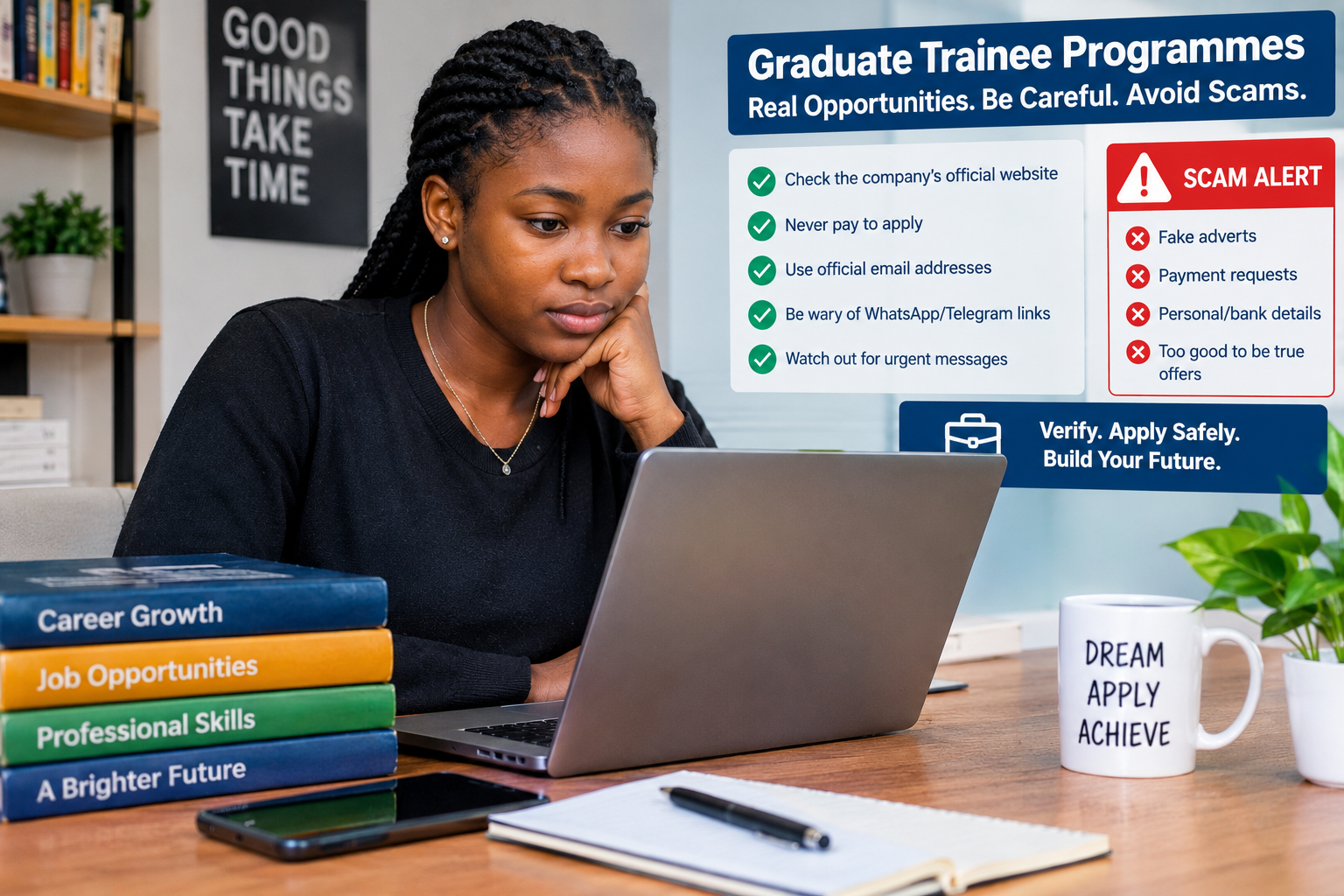
Graduate Trainee Jobs in Nigeria: How to Spot Genuine Opportunities and Avoid Recruitment Scams in 2026
For many young Nigerians, graduate trainee programmes, internships and entry-level recruitment opportunities provide an important starting point for building a successful career. In 2026, these programmes continue to offer recent graduates opportunities to gain practical experience, develop professional skills and secure employment.
However, as more young people search for jobs online, scammers are taking advantage of their desire to find work by circulating fake recruitment adverts and promising employment opportunities that do not exist.
Fake Graduate Trainee Recruitment Adverts on the Rise
Job seekers need to be particularly careful when applying for positions advertised on social media and messaging platforms.
In May 2026, BUA Foods publicly dismissed a graduate trainee recruitment advert circulating online, clarifying that the purported recruitment exercise was not genuine. The incident highlights the importance of verifying job announcements before submitting applications or sharing personal information.
Even when a recruitment advert features the name and logo of a well-known company, applicants should not automatically assume it is authentic.
How to Verify a Graduate Trainee Job Advert
Before applying for any graduate trainee programme, consider the following steps to protect yourself from recruitment fraud.
- Visit the company's official website.
Check the organisation's careers page or verified social media accounts to confirm that the recruitment exercise has been announced. If the vacancy cannot be found through an official channel, exercise caution and seek confirmation from the company.
- Never pay to secure a job.
Legitimate employers do not require applicants to pay suspicious application, interview, examination or processing fees as a condition for recruitment. Requests for money in exchange for a guaranteed job offer are a major warning sign.
- Examine the recruiter's email address.
Genuine recruitment communications generally come from an official company email domain or an authorised recruitment platform. Be cautious when a recruiter claiming to represent a major organisation communicates exclusively through a personal Gmail or Yahoo address.
- Be careful with WhatsApp and Telegram recruitment links.
Scammers may use messaging platforms to collect applicants' CVs, identity documents, banking information and other personal details. Avoid submitting sensitive information until you have verified the recruiter and the recruitment process.
- Watch out for unnecessary urgency.
Messages claiming that applications will close within an hour or that candidates must pay immediately to secure a position may be designed to pressure job seekers into making rushed decisions. Always confirm the actual deadline through an official source.
Common Eligibility Requirements for Graduate Trainee Programmes
Although requirements vary from one employer to another, many graduate trainee programmes have specific conditions relating to age, educational qualifications and previous work experience.
For example, some 2026 recruitment listings specified that applicants must be no older than 27, while another required candidates to have no more than two years of post-NYSC work experience.
These conditions are not universal. Applicants should carefully review the eligibility criteria for each programme before applying, particularly where age limits, NYSC completion, degree classification or work experience are concerned.
When Do Graduate Trainee Applications Open?
There is no single recruitment calendar for all employers in Nigeria. Some organisations announce graduate trainee opportunities during the first quarter of the year, while others recruit around the middle of the year or at different times depending on their staffing needs.
For this reason, job seekers should regularly monitor the official careers pages of companies they are interested in joining rather than relying solely on viral social media posts.
It is also useful to prepare a professional CV, academic documents and other relevant credentials in advance so that you can apply promptly when a genuine opportunity becomes available.
Final Advice for Nigerian Job Seekers
Finding a graduate trainee position can be an important step towards financial independence and long-term career development. However, the excitement of receiving a potential job offer should never replace careful verification.
If an opportunity promises guaranteed employment with little or no screening, demands payment or requests sensitive banking information before a legitimate recruitment process has taken place, stop and investigate before proceeding.
Remember: Verify the vacancy through the employer's official website, use authorised application channels and never pay someone who promises to secure a job for you.
Sources: Nigeria Startup Act portal, Heirs Holdings and FirstBank programme pages, Zikoko and Southern Report. Applicants should consult employers' official recruitment channels for the latest vacancies, eligibility requirements and deadlines.