GTCO Fashion Weekend 2026 Set to Transform African Creatives Into Global Brands
The 9th edition of GTCO Fashion Weekend, holding on November 7–8 in Lagos under the theme “Fashion Is Timeless,” goes beyond the usual runway shows. It introduces the GTCO Fashion Collective, a year-round platform designed to connect designers, models, stylists, artisans, and other creatives.
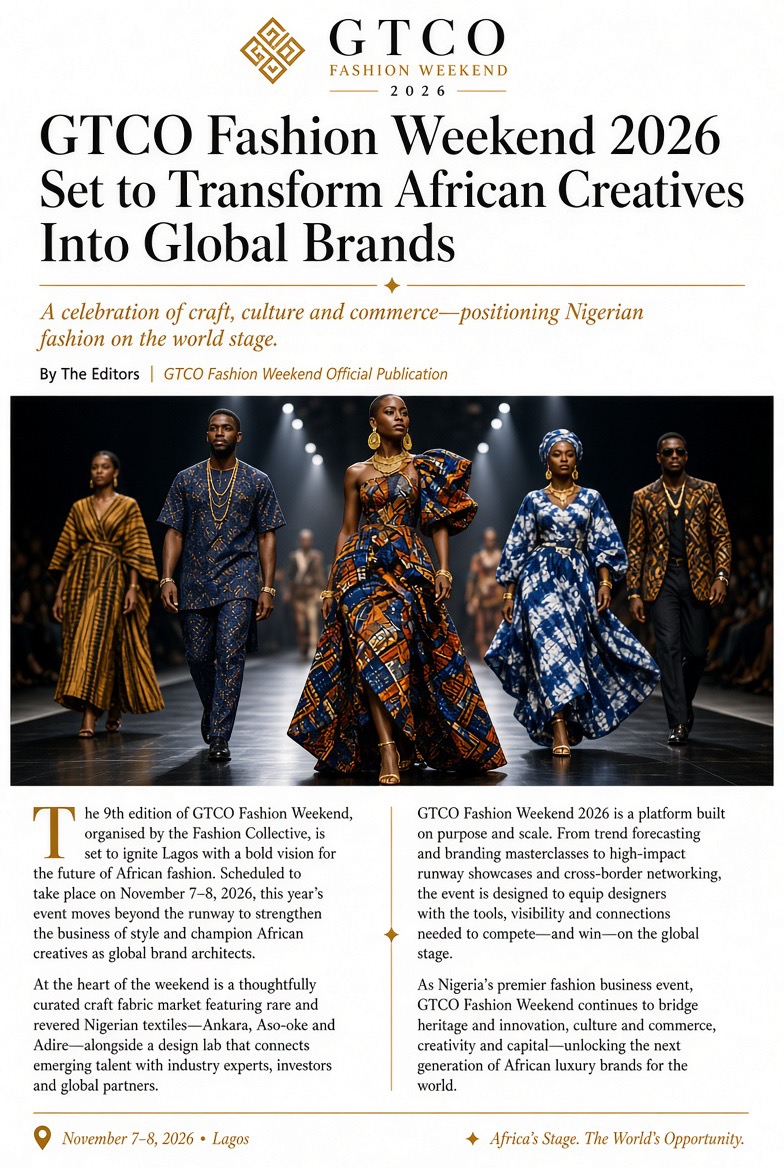
The Nigerian fashion industry is preparing for one of its most significant gatherings of the year as Guaranty Trust Holding Company rolls out the ninth edition of its popular Fashion Weekend. Scheduled for November 7 and 8 at the GTCentre on Water Corporation Drive in Oniru, Lagos, the two-day event carries the theme “Fashion Is Timeless.” More than a glamorous runway showcase, the gathering is being positioned as a strategic platform capable of elevating African designers, artisans, and creatives onto the global stage.
This year’s edition stands out because of a major new initiative: the GTCO Fashion Collective. Unlike previous years that focused mainly on the excitement of the weekend itself, the Collective is designed as a permanent, year-round ecosystem. It aims to keep designers, models, stylists, photographers, buyers, content creators, and traditional fabric makers connected long after the lights dim on the runway. Organisers believe this continuous network will help convert short-term visibility into lasting business opportunities and international recognition.
The Fashion Collective will give special attention to the often-overlooked foundation of African fashion—the indigenous textile artisans. For the first time, a dedicated Craft Fabric Market will bring Aso-oke weavers, Adire dyers, and other traditional makers into the same space as high-fashion designers. This move is expected to create direct commercial links between grassroots craftspeople and the wider fashion value chain, allowing authentic African textiles to reach new markets both within the continent and beyond.
Visitors to the free event can expect a packed programme running from 10 a.m. to 10 p.m. each day. Twelve runway shows will present collections from a mix of established African labels and international names. Designers such as Tongoro, FIA Factory, Ibrahim Fernandez, Washington Roberts, Maison Sara Chraibi, and Imane Ayissi are scheduled for the first day, while the second day will feature Sukeina, House of Marvee, Selam Fessahaye, Kim Shui, Ohlanna Bu Zikora, and LaQuan Smith. A separate presentation stage will highlight emerging Nigerian talent including Spectrum by Aisha, MSO Lagos, Cisca Cecil, Sheye Oladejo, Meme Rocha, and Mide World.
Beyond the catwalk, practical knowledge will take centre stage through a series of masterclasses. Industry figures such as natural hair entrepreneur Renee Morris, fashion model and digital creator Sherlina Nym, and Rachel Ojuromi will share insights on building personal brands, navigating the global market, and sustaining creative businesses. A skincare-focused session by Buttah Skin will also feature, reflecting the growing overlap between fashion and beauty industries across Africa.
Retail remains a core part of the experience. More than 140 carefully selected fashion and lifestyle brands will operate pop-up stores, giving attendees the chance to purchase original pieces at accessible prices. A dedicated Streetwear Hub will celebrate contemporary youth culture and the rising influence of urban fashion, while the craft market ensures that traditional textiles receive equal prominence.
Organisers have emphasised that the event is not merely about spectacle. Over the past nine years, GTCO Fashion Weekend has evolved from a consumer-facing fair into a recognised support system for enterprise in the creative sector. The introduction of the Fashion Collective marks a deliberate shift toward long-term infrastructure. By providing a searchable directory and ongoing connection points, the platform seeks to solve one of the persistent challenges facing African creatives: the difficulty of maintaining momentum and commercial relationships after major events end.
Industry observers note that fashion in Africa is increasingly viewed as both cultural expression and economic opportunity. Nigeria, with its large youth population and vibrant design talent, sits at the centre of this conversation. Platforms that combine visibility, skills development, and market access are seen as critical for helping local brands compete internationally. The GTCO initiative aligns with this broader trend by linking high fashion with traditional craftsmanship and providing tools that extend beyond a single weekend.
For many young designers and artisans, the event offers a rare chance to present their work to a mixed audience of consumers, buyers, and industry professionals in a single location. The free entry policy further lowers barriers, allowing students, emerging talent, and fashion enthusiasts to participate fully. This accessibility has helped the Fashion Weekend build a loyal following over the years while still attracting serious commercial interest.
As the November dates approach, attention is also turning to how the Fashion Collective will operate after the event. Details on membership, digital tools, and year-round activities are expected to be rolled out progressively. If successfully implemented, the platform could serve as a model for other creative industries seeking sustainable support structures rather than one-off showcases.
The ninth GTCO Fashion Weekend arrives at a time when African fashion continues to gain global attention. Designers from the continent are appearing more frequently on international runways, and African textiles are increasingly valued for their cultural depth and originality. By strengthening the local ecosystem and creating clearer pathways to wider markets, the event and its new Collective aim to ensure that more Nigerian and African creatives are not only seen but also positioned to build enduring global brands.
In an industry where talent has never been lacking, the missing pieces have often been structure, continuity, and commercial linkages. This year’s Fashion Weekend attempts to address those gaps. Whether through the craft market that elevates traditional makers, the masterclasses that equip entrepreneurs with practical skills, or the Collective that keeps the community connected, the focus remains clear: turning creative potential into lasting professional success.