FG’s ₦70,000 Transport Allowance Faces Labour Opposition as Cost-of-Living Concerns Persist
The Federal Government’s proposed ₦70,000 monthly transport allowance for eligible federal workers has faced opposition from the Trade Union Congress (TUC), which is calling for higher salaries and the fulfilment of outstanding labour agreements.
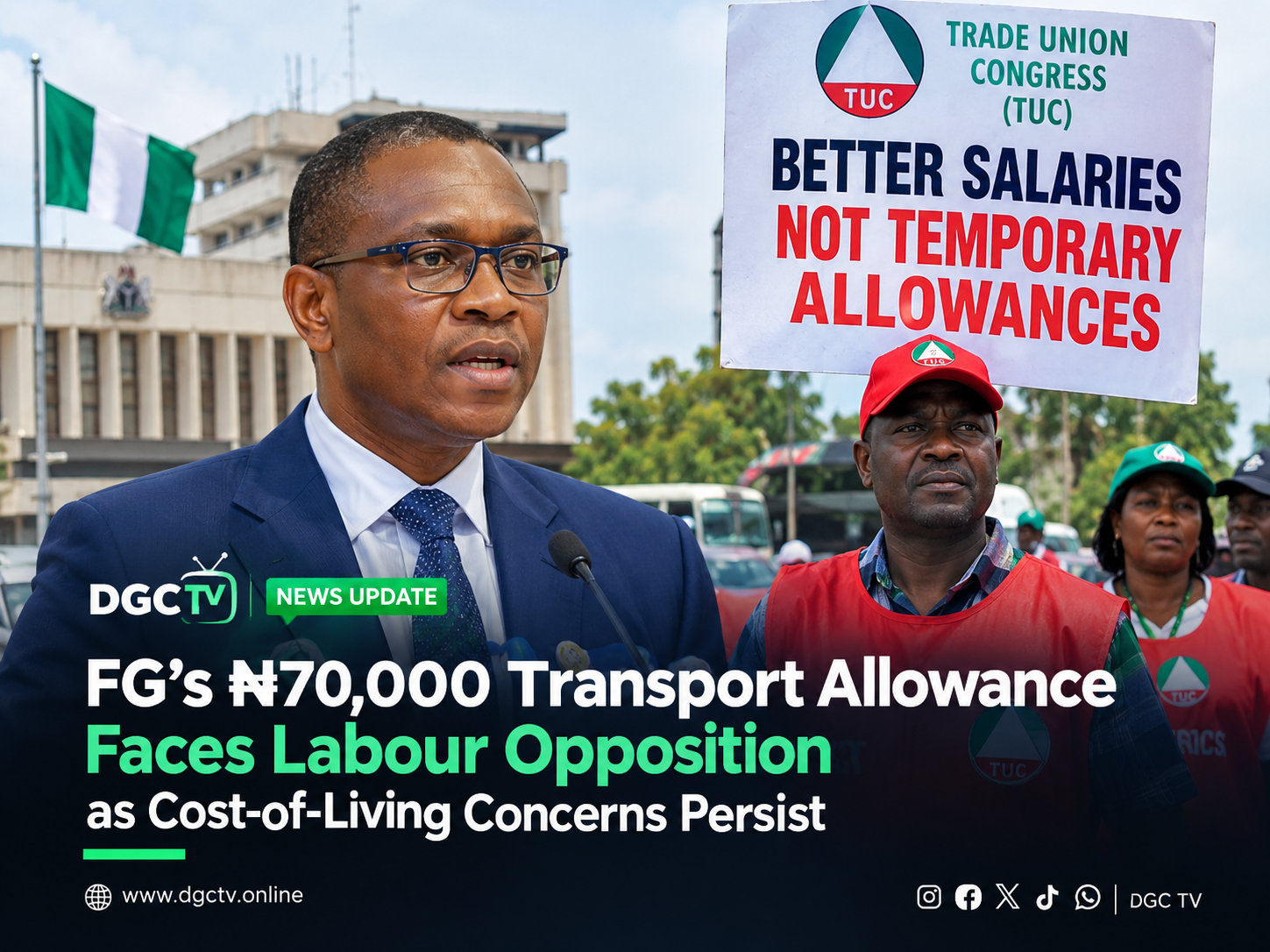
The Federal Government’s plan to provide eligible federal workers with a monthly transport allowance of ₦70,000 for six months has triggered fresh debate over the best way to ease Nigeria’s rising cost of living.
The intervention, scheduled to begin in November 2026, followed discussions between the government and the Nigeria Labour Congress (NLC). It is intended to help public servants manage the increasing cost of commuting to work.
However, the Trade Union Congress (TUC) has rejected the temporary arrangement, insisting that workers need a meaningful salary increase rather than short-term financial support.
The congress has also called for outstanding agreements affecting health workers to be implemented, warning that unresolved commitments could undermine confidence in negotiations between labour unions and the government.
The disagreement comes as households continue to face pressure from transportation, food, healthcare and other essential expenses. While the allowance could offer some immediate relief to eligible recipients, questions remain about its coverage, funding and long-term impact.
For workers outside the federal public service, including private-sector employees, traders and informal-sector operators, the proposed payment does not automatically provide similar assistance.
The latest development has renewed calls for broader measures to improve purchasing power, reduce transportation costs and make essential goods and services more affordable.
DGC TV Analysis: The key issue is whether temporary assistance can deliver meaningful relief without a longer-term strategy to improve wages and reduce the cost of living. Clear eligibility rules, reliable payment arrangements and sustainable economic measures will be important to determining the programme’s impact.
Source basis: Reuters, Channels Television and The PUNCH, reporting published on 28–29 October 2026. This article is an original rewrite, not a claim of exclusive reporting by DGC TV.